Microcurrent Therapy for Pain: What Is MPS Therapy and How Does It Work?
If you’ve been dealing with lingering pain, muscle tension, or an area of the body that hasn’t been able to fully recover, you’ve probably tried a few different things: stretching, massage, exercise, maybe dry needling, acupuncture, medications or topicals.
Sometimes, though, your body needs a little something different. Today, we are excited to dive into a new tool we’ve been using at Uplift and are having great results with!
Dolphin Micro-Point Neuro Stimulation (MPS) is a type of microcurrent therapy and one of the tools we use at Uplift to help address pain, muscle tension, scar tissue restrictions, and nervous system sensitivity, all without needles.
What Exactly Is Dolphin MPS?
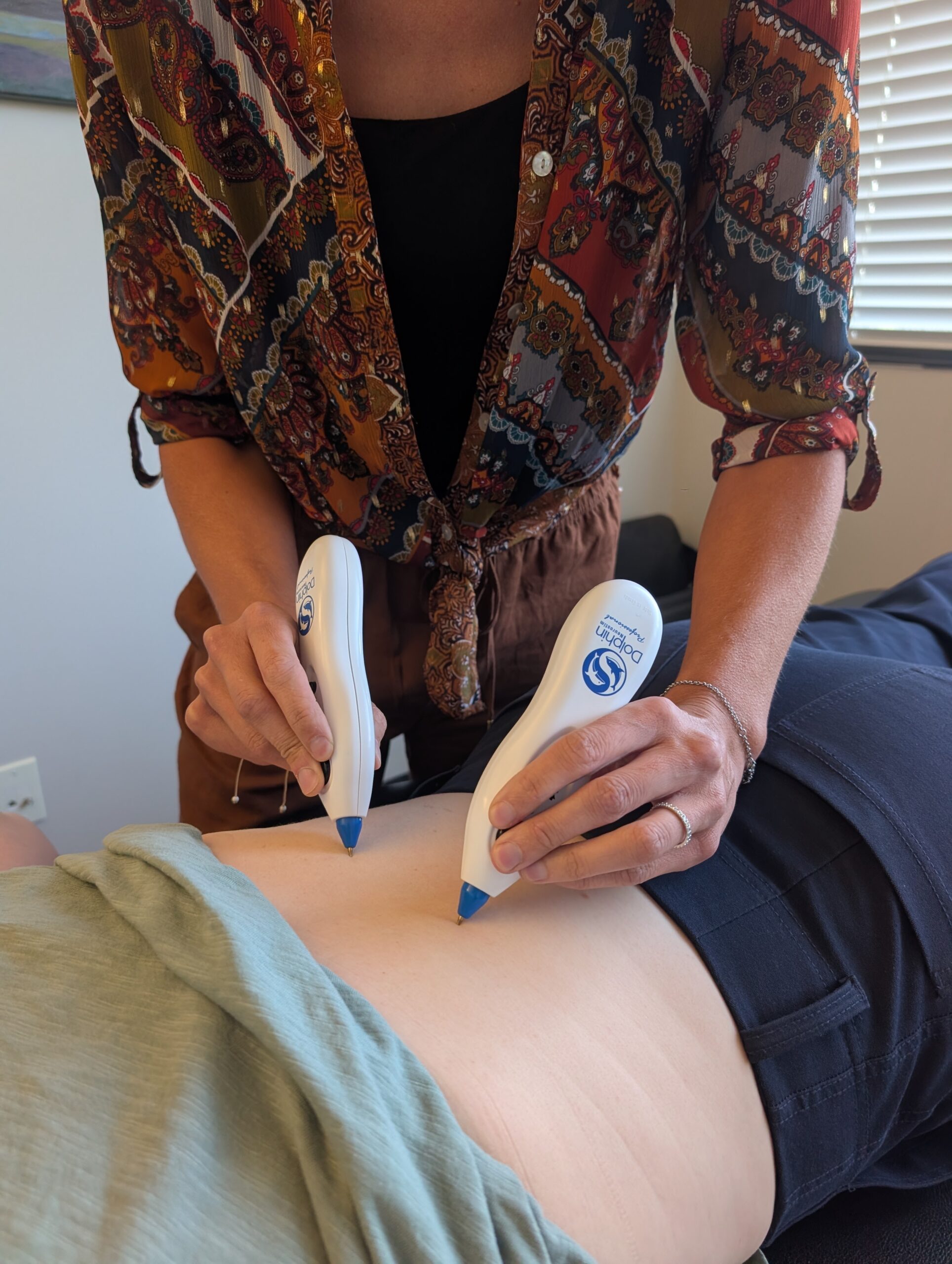
Dolphin MPS, also called Micro-Point Stimulation, is a form of microcurrent therapy that uses a small handheld device to deliver very low-level electrical impulses to specific points on the body.
Your therapist may use it on areas such as:
- Trigger points
- Muscle points
- Acupuncture points
- Areas of scar tissue
- Sensitive or painful areas
- Places of injury or strain
The goal is to provide gentle stimulation that can help influence muscle tension, pain sensitivity, and the nervous system.
Unlike a traditional TENS unit that you might use at home, MPS is applied directly to specific points by your practitioner rather than using larger electrode pads.
And don’t worry, the treatment itself is typically very gentle. In fact, most people describe feeling a small tingling sensation, warmth, or very little at all.
What Can Dolphin MPS Actually Help With?
One of the reasons we love having MPS as a tool in our treatment toolbox is that it can be used in a variety of situations.
1. Microcurrent Therapy for Pain & Muscle Tension
Microcurrent therapy for pain can be used as part of treatment for things like back or hip pain, neck and shoulder tension, headaches, TMJ-related tension, tendon or soft tissue irritation, chronic muscle pain, and sports-related injuries.
Depending on what you’re experiencing, your therapist may use it as part of treatment for things like:
- Back or hip pain
- Neck and shoulder tension
- Headaches
- TMJ-related tension
- Tendon or soft tissue irritation
- Chronic muscle pain
- Sports-related injuries
It isn’t meant to be a magic fix for pain. Instead, it’s one tool we can use to help your body become more comfortable so we can work on the bigger picture.
2. Tight Muscles & Trigger Points
Have you ever had a muscle that feels like it is just stuck on? Sometimes stretching doesn’t quite do the trick.
MPS can be used around trigger points and areas of muscle tension to help decrease that feeling of tightness and make movement more comfortable.
This can be especially helpful when tight or overactive muscles are limiting your mobility or making other exercises difficult.
3. Scar Tissue: (One of Our Favorite Uses)
Microcurrent therapy may also be used as part of scar tissue treatment, particularly when restrictions in the tissue are contributing to tightness, sensitivity, or discomfort. This is one of the areas where we especially love having MPS available as another treatment option.
After surgery or injury, the tissues underneath the scar can become less mobile or develop restrictions between layers of tissue.
This can happen with many different types of scars, including:
C-section scars, abdominal surgeries, orthopedic surgeries, and other injuries.
Your therapist can use MPS as part of a broader scar treatment approach to help address restrictions and improve tissue mobility. And importantly, scar treatment isn’t just about how the scar looks… We’re interested in how the tissue underneath it moves and how it may be affecting the rest of your body.
4. Helping Your Nervous System Calm Down
Your nervous system plays a huge role in how you experience pain and tension.
When your body has been dealing with pain or stress for a long time, your nervous system can become more sensitive and stay in a heightened state of alert.
MPS can be incorporated into treatment with the goal of helping your body shift out of that “always on” feeling.
Some treatment approaches may target areas associated with parasympathetic nervous system regulation, including the vagus nerve.
For some people, the experience is simply very relaxing.
And when your nervous system feels safer and calmer, it can become easier for your muscles to relax and for you to move without constantly bracing against discomfort.
5. Supporting Movement & Recovery
Sometimes pain isn’t coming from one isolated muscle or joint. An injury, surgery, repetitive movement, or change in the way you move can create a whole chain of compensations throughout the body.
MPS may be used alongside manual therapy and exercise to help decrease discomfort and make movement easier.
This can be particularly useful for people recovering from:
- Sports injuries
- Overuse injuries
- Surgery
- Chronic muscle tension
- Persistent pain
The goal is always to use the treatment as a tool to help you move better, rather than relying on passive treatment alone.
Is Dolphin MPS the Same as Dry Needling?
No! And this is a common question.
Dry needling uses very thin needles. MPS does not.
MPS is completely external and needle-free, which makes it an appealing option for people who aren’t comfortable with needles or who simply want another treatment option.
Your PT may also combine MPS with other treatments such as:
- Manual therapy
- Exercise
- Internal pelvic floor therapy
- Dry needling
- Breathwork
- Movement retraining
Your treatment isn’t based on a single technique. Your therapist chooses the combination of tools that makes the most sense for your body and your goals.
What Does an MPS Session Feel Like?
Treatment is usually pretty quick. Your therapist will identify the areas or points they want to address and apply the Dolphin device directly to those areas.
You may feel:
- A gentle tingling
- A small pulsing sensation
- Warmth
- Very little sensation at all
Some people find the treatment surprisingly relaxing.
Your response will depend on your body and what we’re treating, so your therapist will adjust the treatment based on how you respond.
Why We Use It at Uplift
At Uplift, we’re big believers in having multiple tools in the toolbox. There isn’t one treatment that works for every person, or even one treatment that works for every problem a person has.
MPS gives us another way to approach areas of pain, tension, scar tissue, and nervous system sensitivity while still keeping the focus on the bigger picture.
Ultimately, we’re not trying to simply make a painful area feel better for an hour.
We’re trying to understand why you’re having the problem in the first place and help you move toward lasting improvement.
That means combining MPS with hands-on treatment, targeted exercises, breathing strategies, strength training, or movement retraining.
Could Dolphin MPS Be Right for You?
If you’ve been dealing with persistent pain, tight muscles, scar tissue restrictions, or an area that just doesn’t seem to be responding to your usual treatments, microcurrent therapy may be worth discussing with your physical therapist.
It isn’t right for everyone, and it isn’t a standalone solution for every condition. But for the right person, it can be a helpful addition to a personalized treatment plan.
Your body doesn’t always need more force or stretching. Sometimes it needs the right input to help it relax, reconnect, and move better.
If you’re curious whether Dolphin MPS could be a good fit for your treatment, talk with your Uplift pelvic floor PT at your next appointment.