Why Generic Pelvic Floor Programs Don’t Get You Results

If you’ve ever looked into pelvic floor therapy, you’ve probably come across online “pelvic floor reset” programs or generalized exercise plans that promise to fix leakage, pain, or core issues.
To be clear, some of these can be a great starting point! They can help you build awareness, reconnect with your body, and even improve mild symptoms.
But the truth is pelvic health is not one-size-fits-all. And when healthcare is treated that way, it often only gets you part of the way to a solution.
If you’re dealing with more persistent, complex, or recurring symptoms, a cookie-cutter approach usually isn’t enough to truly resolve the issue long term.
Pelvic Health Is More Complex Than You Think
Your pelvic floor doesn’t exist in isolation. It’s part of a much bigger system. That means your symptoms aren’t just about your pelvic floor muscles alone! They are influenced by a wide range of factors, many of which have nothing to do with strength alone.
For example:
- Posture and alignment
- Breathing patterns
- Stress and nervous system regulation
- Pregnancy or birth history
- Activity level and daily movement habits
- Bathroom habits, diet, and hydration
When you zoom out and look at the full picture, it becomes clear why a single exercise program, or using the the same set of exercises for everyone, can only get you so far.
True pelvic floor therapy should look at you as a whole person, not just a list of symptoms.
A Quick History of Pelvic Floor PT
Pelvic floor physical therapy hasn’t always looked the way it does today.
In its earlier days, treatment was much more limited and often centered around one primary idea: strengthening. Kegels became the go-to recommendation for just about everyone experiencing pelvic floor symptoms.
But over time, research and clinical experience started to reveal a much more nuanced reality.
We learned that pelvic floor dysfunction isn’t always about weakness. In fact, many people actually have pelvic floors that are overactive, tight, or poorly coordinated. For those individuals, more strengthening isn’t just unhelpful… it can actually make symptoms worse.
As our understanding of the body has evolved, so has the field of pelvic health. Today, pelvic floor physical therapy takes a much more comprehensive and individualized approach. Treatment may include internal assessment for accurate muscle evaluation, hands-on manual therapy, breathing and pressure coordination work, and techniques like dry needling or visceral mobilization to support surrounding tissues and organs.
What we know now is that pelvic health is deeply connected to how your entire body moves, breathes, and responds to stress. (Pretty awesome, right? We think so)
Which means it’s no longer about “just doing Kegels.” It’s also why doing 100 a day sounds pretty awful.
So What Does “Personalized Treatment” Actually Mean?
Great question. This is where things really start to look different from the typical approach.
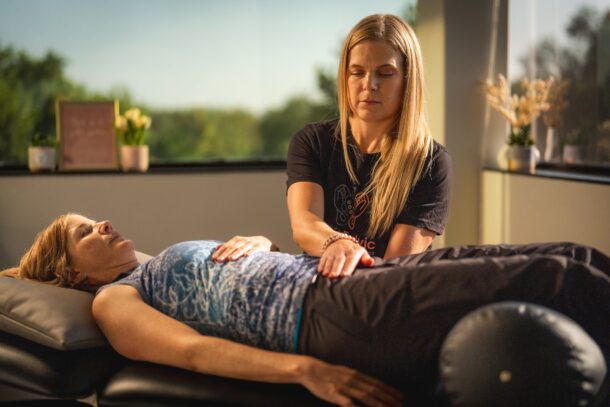
Personalized pelvic floor therapy means your care is built specifically around your body, your symptoms, and your goals, not a preset protocol.
For example, if you’re pregnant, there isn’t one standard plan to follow. Your treatment depends on how far along you are, what symptoms you’re experiencing, how your pelvic floor is functioning at baseline, and what your goals are for delivery and recovery. Two people at the same stage of pregnancy could need completely different things.
It also means recognizing that the pelvic floor is not a muscle group you can see, which makes it much harder to control. Two people can hear the same cue like “engage your pelvic floor” or “breathe down into your pelvic floor” and do entirely different things in their body. Without feedback, it’s nearly impossible to know if you’re doing it correctly.
That’s where a pelvic PT’s assessment [LINK] becomes so valuable. By evaluating how your body responds (often including internal assessment), we can guide you with cues that actually make sense for your brain and body (it truly is about building mind-body connection).
Personalization also shows up in exercise selection. The same exercise might feel great for one person, but cause discomfort for another. That’s why we’re constantly asking questions, adjusting, and refining based on your feedback.
And finally, it means your treatment isn’t static. Some people need more hands-on work at first, while others respond better to movement-based approaches. For many, that balance shifts over time as symptoms improve.
Why Cookie-Cutter Programs Fail
The biggest issue with generalized programs is that they don’t truly get to the root of the problem. They can absolutely help with awareness and may even improve symptoms for a period of time. But if the underlying cause isn’t addressed, those improvements often don’t last.
That’s when people start to notice symptoms creeping back in, hitting a plateau, or feeling like they’re doing “all the right things” but not getting the results they expected.
Symptoms Can Sometimes Get Worse
Not every pelvic floor needs strengthening.
If your pelvic floor is already holding a lot of tension, guarding, or is overactive, adding strengthening exercises on top of that can actually push things in the wrong direction, adding more stress and possibly pain. Instead of improving symptoms, it may increase tension, reduce coordination, and lead to more discomfort.
That’s when people might experience things like:
- Increased urinary leakage
- More pain with intercourse
- A feeling of tightness or pressure that wasn’t there before
In these cases, the body often needs the opposite approach (at least to start): learning how to relax, lengthen, and coordinate the pelvic floor rather than strengthen it.
But without an individualized assessment, there’s no clear way to know which approach your body actually needs.
We’ll Leave You With This…
There are some truly great online resources and programs out there, and they can be an empowering first step. For many people, it is the first time they’ve ever thought about, or possibly even connected with, their pelvic floor at all.
But if you’re looking for long-term relief and a true resolution of your symptoms, individualized care is your best bet, no question. Real progress comes from understanding your body, identifying the root cause of what’s going on, and having a plan that evolves with you over time.
At the end of the day, you and your pelvis are in this for the long haul.
You only get one pelvis. It deserves care that’s built intentionally for you!