Kegels…Are They In or Are They Out?

For years, Kegels have been the go-to recommendation for just about every pelvic floor issue: leakage, postpartum recovery, pelvic floor “strengthening”… you name it. But lately, you may have heard a different message: “Stop doing Kegels.”
So… which is it? Are Kegels in? Or are they out? The answer is a little more nuanced than a simple yes or no. So we wanted to lay it all out for you! Let’s dive in.
A Quick History Lesson: Why Kegels Became So Popular
Kegels date back to the 1940s, when gynecologist Arnold Kegel introduced them as a way to help women manage urinary incontinence after childbirth. At the time, it was a huge breakthrough. Strengthening the pelvic floor muscles helped many women regain control and improve their symptoms, and it gave people something they could actively do to help themselves.
So naturally, Kegels became widely recommended. And for a long time, the thinking was pretty straightforward: Pelvic floor issue? Strengthen, do kegels. Boom, simple.
But as pelvic floor physical therapy has evolved, we’ve learned that it’s not always about strength.
How Pelvic Floor PT Has Evolved
Over the years, pelvic floor physical therapy has become much more complex and personalized.
We now understand that pelvic floor dysfunction can come from a variety of causes, including:
- Muscles that are too weak
- Muscles that are too tight
- Poor coordination between the core, breath, and pelvic floor
- Compensation patterns throughout the body
Because of this, treatment has expanded far beyond just isolated contractions. Modern pelvic PT often focuses on how your pelvic floor works as part of a whole system, alongside your diaphragm, core, hips, and nervous system. Instead of just tightening a muscle, we’re looking at how it moves, lengthens, responds to pressure, and coordinates with the rest of your body.
Which means Kegels are no longer the only tool in the toolbox.
What Kegels Are, Really
Let’s clear this up, because there’s a lot of confusion here. A Kegel is essentially a pelvic floor contraction–a lift and hold of the muscles that support your bladder, bowel, and reproductive organs.
Think of it like gently lifting those muscles upward and holding them. And yes this can be helpful, but Kegels only work well when your body is ready for them. If your pelvic floor already has good mobility, can fully relax, and just needs more strength or endurance, then Kegels can be a great addition.
But if your pelvic floor is tight, overactive, poorly coordinated, or not fully relaxing then doing repeated contractions (aka Kegels) may actually reinforce the problem instead of fixing it.
Timing Is Important
The problem isn’t the exercise itself, it’s timing that really matters. Kegels are often introduced too early, when symptoms are present and before the pelvic floor understands how to move through its full range of motion.
Early on in PT care, we’re usually working on:
- Re-coordinating the pelvic floor with your breath
- Restoring the ability to fully relax and lengthen
- Improving how your core and pelvic floor work together
- Reducing pain or other uncomfortable symptoms
If you skip that step and go straight into strengthening, you’re essentially strengthening a muscle in its current pattern, which may not be the pattern you want.
That’s why it’s not that Kegels are “bad”… it’s that how and when you use them matters most.
3 Exercises That Are Often More Effective Than Kegels for “Strengthening” and Lengthening
Instead of isolating the pelvic floor, we often start with movements that naturally integrate it into the whole body.
Some of our go-to exercises include:
- Hip bridges – help connect the glutes, core, and pelvic floor while working on coordination and support
- Bird dogs – improve core stability and pelvic control through dynamic, functional movement
- Diaphragmatic breathing – teaches your pelvic floor how to fully relax and move with your breath (this one is huge!)
These exercises don’t just strengthen, they help your body learn how to use your pelvic floor in real-life situations and bring in other muscle groups to work together.
What Happens in a Pelvic Floor Assessment?
This is the are a lot of people are missing and why it’s so hard to know if Kegels are right for you.
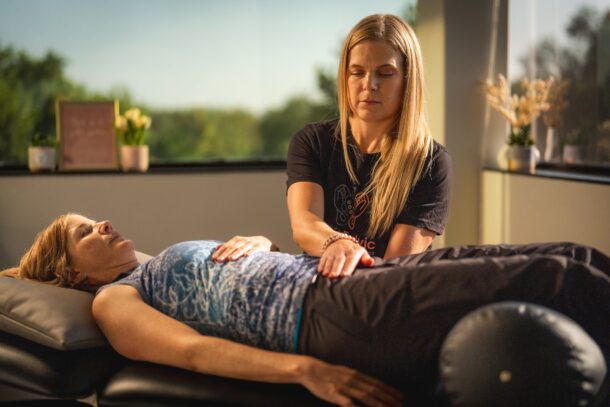
During a pelvic floor assessment, we’re not looking for muscle strength, We’re looking at how they function as a whole.
We assess things like:
- Where your pelvic floor sits at baseline (is it tight, relaxed, a mixture or somewhere in between?)
- How it responds to a deep breath
- What happens when you engage your core
- Whether it can both contract and fully relax
- How well it coordinates with the rest of your body
This gives us a clear picture of what your pelvic floor is currently doing and what it actually needs to improve. Truth is, most people can’t accurately assess this on their own. That’s where we come in!
So… Are Kegels Out?
Short answer is: Not necessarily. But they’re also not the universal solution they were once thought to be. Kegels can be helpful when they’re used at the right time, for the right person, in the right way.
The problem is that most people are told to do them without ever being assessed. So they’re guessing whether it’s what their body actually needs. And as we now know… there’s no one-size-fits-all approach to pelvic health. (We’ll save that deeper dive for our blog next month 😉)
If you’re dealing with symptoms like leakage, urgency, constipation, pain with intercourse, or pelvic/hip/low back pain, the best place to start isn’t guessing, it’s getting answers by professionals who know what they’re looking for.
A pelvic health assessment can help you understand:
- What your body is doing now
- Why your symptoms are happening
- And what approach will actually work for you
Because sometimes the answer is Kegels, or some variation. And sometimes (more often than not) it’s something completely different, completely tailored to you.
Ready to Find Out What Your Body Needs?
If you’re not sure whether Kegels are right for you, you don’t have to figure it out on your own.
Scheduling a pelvic health exam is the best way to get a clear, personalized plan that actually addresses your symptoms and supports your long-term goals. We’d love to help you find the exact approach your body needs! It’s kind of what we do here 🙂